
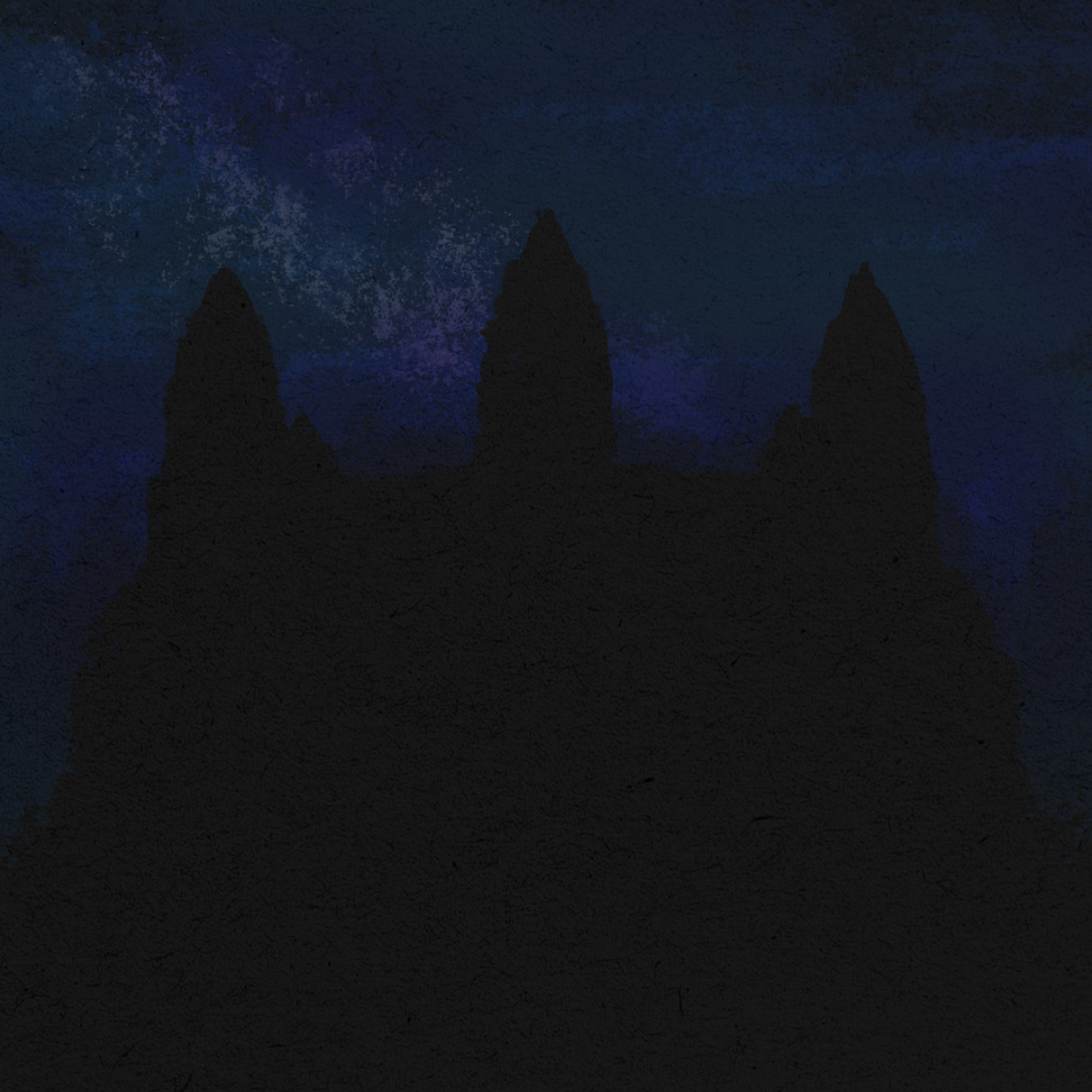
While we light up tangible heritages, we push an “intangible heritage” far away from us – Darkness
Preservative Site & Preservative Darkness
While we light up tangible heritage, we push an intangible one far away from us, into the darkness.
When night falls, monuments everywhere glow. Ancient walls, royal gates, sacred temples, colonial façades, all brilliantly lit to keep history visible, culture alive, identity proudly displayed. Yet, in our desire to spotlight the past, we neglect a more fragile heritage, the natural darkness that once wrapped these sites in quiet dignity.


Why is a heritage site a problem at night?
A recent study funded by the Slovenian Research Agency puts numbers to what many of us sense but rarely measure: the illumination of cultural monuments is a significant source of light pollution. In developed countries, lighting historic façades alone accounts for 5% to 20% of total light pollution.
Most of this lighting shines upward from the ground. We aim beams at castle walls, cathedral spires, and ancient gates, but 60% to 80% of that light misses its target, drifting into the sky and the surrounding environment. What was meant to honor becomes a nuisance to the life around it. Insects, birds, nocturnal mammals, even the rhythm of nearby plants, all feel this careless spill of artificial light.
So we must ask: does preserving a site’s grandeur truly require sacrificing the darkness that once embraced it?

The night show – culture in the spotlight
Across the world, iconic sites stand ablaze after sunset: Turaif in Saudi Arabia, Angkor’s temples in Cambodia, the Pyramids of Giza, Hoi An’s riverside lanterns, the Great Wall snaking under floodlights, Ayutthaya’s ruins in Thailand, Hue’s Imperial City, Buda Castle in Budapest, Melaka River’s banks, Mumbai’s Chhatrapati Shivaji Terminus.
Bringing culture to light, or bringing light to culture? These spectacles draw crowds, extend visiting hours, and boost local economies. They broadcast a message: We remember. We care. Yet the very beams that carve these messages into the night sky also erase the dark, that other heritage we inherited and that other creatures rely on to live.
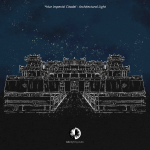
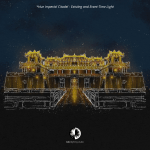
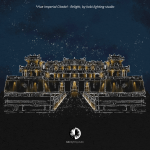
When preservation conflicts with preservation
Light that reveals our shared history can overshadow other forms of life that depend on the dark. If a city truly wishes to protect its heritage, both tangible and intangible, it must balance these competing needs.
This is where thoughtful design comes in. Lighting designers can help cities honor their past without drowning out the night. By studying how light behaves and proposing “friendlier” methods, they can reduce the stray beams that brighten the sky instead of the stone. A well-designed heritage lighting plan can focus on what truly needs to be seen, and when, while shielding wildlife and restoring parts of the night to itself.
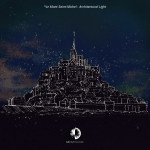
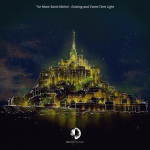
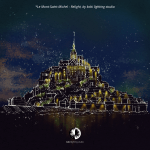
Learning from Europe’s light-wise guardians
Some countries have begun to treat darkness as heritage, too. Slovenia, for example, has some of the strictest laws on light pollution. Since 2007, its Decree on Limit Values due to Light Pollution states that luminaires illuminating cultural sites must emit 0% of light above the horizontal.
In Italy, many regions cap the brightness of façades to 1 cd/m². Friuli-Venezia Giulia goes further, limiting the blue part of the light spectrum by setting a maximum color temperature of 3300 K; a step that aligns with scientific advice to protect the night sky. Chile’s legislation restricts blue light to under 15% of total emission below 500 nm, echoing recommendations by the International Astronomical Union.
France requires that façades go dark after 1:00 a.m., a simple rule with an immediate effect: stars return, ecosystems recover, and the night breathes again.
The true cost of heritage under lights
To “unlight” heritage is to challenge the economic priorities of cities, nations, and civilizations. Outdoor illumination generates revenue, boosts tourism, and sustains night economies, but at an ecological cost often ignored.
The best solution is deceptively simple: turn off the lights. Let darkness do what it has done for millennia, cradle the sites we claim to protect, shield the creatures we share it with, and remind us of our place under the stars.
As lighting designers, urban planners, policymakers, and citizens, we must look deeper: beyond cultural pride and visual beauty to the ecological truth. Friendlier lighting, tighter laws, warmer colors, all good steps. But these are still compromises.
Are we ready to trade profit for darkness? Are we ready to accept that even the most “sustainable” light still comes at a cost? True preservation does not begin at the switch; it begins when we choose to leave the switch off.
In the end, don’t forget that darkness is also a heritage. To protect what we can see, we must remember to protect what we cannot.
References:
Bakare, Lanre, et al. “Moon Added to List of Threatened Cultural Sites for First Time.” The Guardian, 16 Jan. 2025. The Guardian, https://www.theguardian.com/culture/2025/jan/16/moon-list-threatened-cultural-sites.
Kobav, Matej Bernard, et al. “Sustainable Exterior Lighting for Cultural Heritage Buildings and Monuments.” Sustainability, vol. 13, no. 18, 18, Jan. 2021, p. 10159. http://www.mdpi.com, https://doi.org/10.3390/su131810159.
Light Pollution DARKER SKY | Interreg North Sea. https://www.interregnorthsea.eu/darker-sky/light-pollution. Accessed 22 Apr. 2025.
“(PDF) Better, Not More, Lighting: Policies in Urban Areas towards Environmentally-Sound Illumination of Historical Stone Buildings That Also Halts Biological Colonization.” ResearchGate, Nov. 2024. http://www.researchgate.net, https://doi.org/10.1016/j.scitotenv.2023.167560.
LIFE+ Life at Night project & Slovenian National Commission for UNESCO. (n.d.). Nature-friendlier lighting of objects of cultural heritage (churches). In Recommendations. https://www.anl.bayern.de/publikationen/anliegen/additional_data/an37200notizen_2015_kulturdenkmaeler_life_bericht_engl.pdf